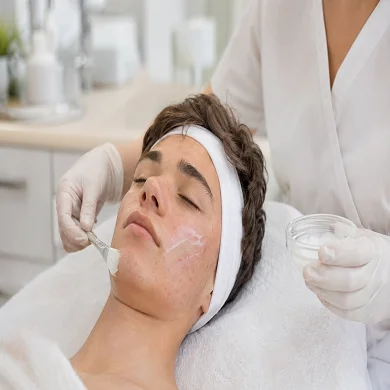
Teenage skin is in a state of constant biological change — and it needs specialized care that most standard facial treatments simply aren’t designed to provide. A facial for teenagers is specifically designed to address these unique concerns. Hormonal fluctuations during adolescence trigger a surge in androgen levels that directly stimulate sebaceous glands to overproduce sebum — creating the foundation for comedone formation, Cutibacterium acnes proliferation, and the inflammatory breakouts that affect up to 85% of teenagers at some point during adolescence.
The right facial for teenagers doesn’t just address surface-level concerns. It works with the biological reality of teenage skin — regulating sebum overproduction, clearing comedones, restoring pH balance, and strengthening the lipid barrier — using only gentle, age-appropriate treatments that support healthy skin development rather than disrupting it.
This teenage skincare guide covers everything parents and teenagers need to know — the unique challenges of teenage skin, the safest and most effective professional treatments available, and the practical tips that keep teenage skin consistently clear and healthy between appointments.
Teen Skin Challenges
Teenage skin faces a unique set of biological challenges that distinguish it from adult skin — and understanding these common teenage skin problems is essential before choosing any professional facial treatment.
Primary biological drivers of teenage skin concerns:
- Androgen surge — Increased testosterone and DHT levels enlarge sebaceous glands and significantly boost oil (sebum) production.
- Follicular hyperkeratinization — Dead skin cells accumulate and mix with oil, clogging pores and forming comedones.
- C. acnes proliferation — Bacteria thrive in clogged, oil-rich pores, triggering inflammation and breakouts.
- Skin barrier immaturity — Lower ceramide levels make teenage skin more reactive and easier to damage.
- Hormonal fluctuation — Monthly hormonal shifts create inconsistent oil production and skin sensitivity.
Common teenage skin concerns at a glance:
| Skin Concern | Biological Cause | Prevalance |
| Blackheads & whiteheads | Keratin buildup + excess sebum | Extremely common |
| Inflammatory acne | Bacteria + inflammation | Affects up t- 85% |
| Oily skin | Overactive sebaceous glands | Very common |
| Enlarged pores | Oil stretches follicles | Common |
| Post-acne marks | Excess melanin after inflammation | Common |
| Sensitivity | Weak skin barrier | Common |
Acne-Prone Skin Considerations
Teenage acne requires a different approach than adult acne.
Teen skin is both more responsive and more vulnerable, meaning:
- Improvements can appear quickly (2-3 weeks with proper care)
- Harsh treatments can damage the skin barrier and worsen oil production
- Improper extraction increases the risk of scarring
Dermatologists and licensed estheticians consistently recommend gentle, targeted treatments over aggressive products, which often strip the skin and trigger rebound oil production.
Best Professional Facials for Teenage Skin
Acne-Control Facial for Teenagers (Best Facial for Teenage Acne)
An acne-control facial is specifically designed to treat breakouts, clogged pores, and excess oil in teenage skin.
This treatment:
- Uses gentle steam to soften clogged pores.
- Performs careful extractions to prevent scarring.
- Applies salicylic acid (1-2%) to unclog pores and reduce bacteria.
- Uses a clay mask (kaolin/bentonite) to absorb excess oil.
- Finishes with a lightweight, oil-free moisturizer.
Benefits of an acne-control facial for teenagers:
- Reduces blackheads and whiteheads.
- Controls acne-causing bacteria.
- Regulates oil without over-drying.
- Prevents post-acne marks.
- Minimizes scarring risk.
Best for: Oily, acne-prone teenage skin with mild to moderate breakouts.
Gentle Cleansing Facial for Teenagers
The gentle cleansing facial is ideal as a basic facial for teenagers and works well for maintaining healthy skin.
This treatment:
- Uses a gentle double cleanse.
- Applies light steam.
- Performs minimal extractions.
- Uses a mild, fragrance-free mask.
- Restores hydration with ceramides.
Benefits of a gentle cleansing facial for teenagers:
- Deep cleans beyond daily washing.
- Maintains balanced skin.
- Strengthens the skin barrier.
- Suitable for sensitive skin.
Best for: First-time facials, mild congestion, or maintenance.
Hydrating Facial for Teenagers
A hydrating facial for teenagers helps balance oily yet dehydrated skin — a common but overlooked concern.
This treatment:
- Uses hyaluronic acid for deep hydration.
- Replenishes the barrier with ceramides.
- Includes niacinamide to balance oil.
- Calms inflammation with soothing botanicals.
Benefits of a hydrating facial for teenagers:
- Hydrates without clogging pores.
- Reduces excess oil caused by dehydration.
- Strengthens the skin barrier.
- Improves overall skin balance.
Best for: Oily-dehydrated or sensitive teenage skin.
What Happens During a Facial for Teenagers?
Understanding the process can remove uncertainty and make the experience more comfortable. A professional facial for teens is simple, safe, and structured.
Typical steps include:
- Skin analysis to identify concerns
- Gentle cleansing to remove oil and impurities
- Light steam to open pores
- Careful extractions if needed
- Application of a targeted mask
- Hydration and sun protection
Each step is adjusted based on the teen’s skin type. The goal is not just immediate results, but long-term skin health.
How Often Should Teenagers Get a Facial?
Consistency matters more than intensity. Skin renews itself roughly every 28 days, so treatments should align with this cycle.
Recommended facial frequency for teenagers:
| Skin Condition | Frequency |
| Mild congestion | Every 4-6 weeks |
| Moderate acne | Every 3-4 weeks |
| Active breakouts | Every 3 weeks initially |
| Maintenance | Every 6 weeks |
Regular sessions prevent buildup, making each treatment more effective than the last. Over time, this creates a noticeable improvement in clarity and texture.
At-Home Care Tips for Teenagers
Professional facials deliver results — but a consistent teenage skincare routine is what maintains them.
| Step | Product | Key Ingredients | Purpose |
| Cleanse (AM) | Gentle cleanser | Sulfate-free | Removes oil |
| Tone | BHA toner | Salicylic acid | Keeps pores clear |
| Moisturize | Gel moisturizer | Niacinamide, ceramides | Balances skin |
| SPF | Sunscreen | Zinc oxide | Prevents damage |
| Cleanse (PM) | Micellar water | Fragrance-free | Removes dirt |
| Treat | Serum | Niacinamide | Controls oil |
| Moisturize | Cream | Ceramides | Repairs skin |
Essential tips:
- Don’t pick or squeeze pimples
- Use SPF daily
- Avoid fragrance-heavy products
- Wash face twice daily only
- Change pillowcases frequently
Ingredients Teenagers Should Avoid
Some products can do more harm than good, especially on developing skin.
Avoid:
- Alcohol-heavy toners that strip natural oils
- Strong exfoliating acids are used too frequently
- Fragrance-heavy products that cause irritation
- Harsh scrubs that damage the skin surface
Gentle, consistent care always outperforms aggressive treatments.
Common Skincare Mistakes Teenagers Make
Many skin issues come from habits rather than biology alone. Fixing these can significantly improve results.
Common mistakes include:
- Overwashing the face, which increases oil production
- Skipping moisturizer, leading to dehydration
- Picking or squeezing pimples, causing scarring
- Using too many products at once
Simplifying the routine often leads to faster and more sustainable improvements.
When to See a Dermatologist
While facials are effective for mild to moderate concerns, some cases need medical attention.
Consider professional medical advice if:
- Acne is painful or cystic
- Breakouts leave deep scars
- No improvement after consistent care
- Skin becomes highly inflamed
Early intervention can prevent long-term damage and improve outcomes.
Conclusion
Teenage skin is biologically unique — driven by hormonal androgen surges, overactive sebaceous glands, and a developing lipid barrier — and it requires a facial for teenagers that respects these biological realities.
An acne-control facial helps treat breakouts, a cleansing facial maintains balance, and a hydrating facial restores the skin barrier.
Key takeaways:
- Choose gentle, age-appropriate treatments
- Stay consistent with professional facials
- Follow a simple skincare routine for teenagers at home
- Never pick at acne
- Use SPF daily
With the right combination of professional care and daily skincare, teenagers can effectively manage acne and maintain clear, healthy skin.
Ready to start your teenager’s professional skincare journey? Browse our complete expert guides at Best Facial Treatment — or read our ultimate guide to the best facial treatments to find the right gentle professional treatment for your teenager’s skin today.
FAQs
What is the best facial for teenage acne?
An acne-control facial with salicylic acid and extractions.
How often should teenagers get a facial?
Every 3-4 weeks for acne-prone skin.
Can teenage oily skin still be dehydrated?
Yes, oily skin can lack water and still be dehydrated.
What skincare ingredients are safe for teenagers?
Salicylic acid, niacinamide, ceramides, and hyaluronic acid.
Should teenagers see a dermatologist or esthetician for acne?
An esthetician for mild acne, a dermatologist for severe acne.
At what age can teenagers start getting professional facials?
Around age 13, with professional guidance.
Can facials permanently clear teenage acne?
No, but they help control and reduce breakouts.
Are chemical peels safe for teenagers?
Only mild peels under professional supervision.
Can faicals remove acne scars?
They help prevent scars, but don't remove deep ones.