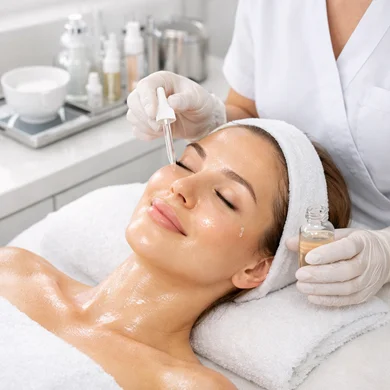
Glowing skin isn’t just about genetics — it’s the result of healthy, well-maintained skin supported by the right treatments and skincare routine. If your complexion looks dull, tired, or uneven, choosing the best facial for glowing skin can dramatically improve your skin’s radiance and overall health.
Professional facial treatments work by improving hydration, boosting collagen production, accelerating cell turnover, and enhancing blood circulation — all of which contribute to naturally glowing skin.
In this guide, you’ll learn:
- Why skin loses its glow
- Best facial for glowing skin
- How to choose the right facial for your skin type
- Pre and post facial care tips
- How often you should get a facial
Why Glowing Skin is Important
Glowing skin is more than an aesthetic goal — it’s a reliable indicator of genuine skin health. When skin looks luminous and radiant, it signals that the outermost layer — the stratum corneum — is smooth, well-hydrated, and effectively reflecting light. When dead keratinocytes accumulate on the surface without being shed through the natural desquamation process, light scatters unevenly, and the complexion appears dull and flat.
Beyond appearance, glowing skin reflects a well-functioning skin barrier — one that retains moisture effectively, defends against environmental aggressors, and maintains a balanced skin microbiome. A compromised barrier, on the other hand, leads to inflammation, uneven melanin production, and the kind of dullness that no highlighter can convincingly fix.
Professional facial treatments that target radiance work by accelerating cell turnover, stimulating collagen synthesis, reducing oxidative stress caused by free radicals, and improving microcirculation — all of which contribute directly to the lit-from-within glow that healthy skin naturally produces.
Factors Affecting Skin Glow
Understanding what dulls your skin in the first place is essential for choosing the best facial for glowing skin that will actually address your specific concern. Several factors contribute to a loss of radiance:
Dead skin cell buildup — when the skin’s natural desquamation cycle slows down due to age, dehydration, or environmental stress, dead keratinocytes pile up on the surface and scatter light unevenly — producing that characteristic dull, flat appearance.
Dehydration and transepidermal water loss — when the skin loses moisture faster than it can retain it, a condition known as increased transepidermal water loss (TEWL), the surface becomes rough and uneven. Rough surfaces don’t reflect light smoothly, which is why dehydrated skin almost always looks dull, regardless of how much moisturizer is applied topically.
Hyperpigmentation and uneven melanin distribution — excess melanin production triggered by sun exposure, hormonal changes, or post-inflammatory responses creates dark patches and uneven tone that significantly reduce overall radiance.
Free radical damage and oxidative stress — environmental aggressors like UV radiation, pollution, and cigarette smoke generate free radicals that trigger oxidative stress in skin cells. This damages fibroblasts — the cells responsible for producing collagen and elastin — leading to a loss of firmness and luminosity over time.
Poor circulation — reduced blood flow to the skin’s surface means fewer nutrients and less oxygen reaching skin cells, producing a sallow, grey, or tired-looking complexion even in otherwise healthy skin.
Disrupted skin microbiome — an imbalanced skin microbiome — the ecosystem of beneficial bacteria living on the skin’s surface — contributes to low-grade inflammation that dulls the complexion and impairs the skin’s natural repair processes.
Recommended Best Facial for Glowing Skin
Not all facials deliver the same radiance results. The best facial for glowing skin depends on the specific factor causing your dullness — dehydration, dead cell buildup, pigmentation, or oxidative damage. Here are the four most effective professional treatments for achieving a genuine, lasting skin glow.
Hydrating Facials
If your dullness is driven by dehydration and increased transepidermal water loss, a professional hydrating facial is your most direct path to visible radiance. Dehydrated skin lacks the water content needed to maintain a smooth, light-reflecting surface — and no topical moisturizer can replicate the depth of hydration that a professional treatment delivers.
A professional hydrating facial works by delivering layered concentrations of humectants — primarily hyaluronic acid — directly into the skin through professional-grade serums and treatment masks. Hyaluronic acid draws water molecules from the environment and deeper skin layers toward the surface, plumping cells and smoothing the skin’s texture at a microscopic level. The result is an immediate, visible improvement in radiance that comes from genuinely better-hydrated skin — not surface shine.
Key ingredients to look for:
- Hyaluronic acid — draws and retains moisture at multiple skin layers
- Glycerin — a powerful humectant that supports the skin’s natural moisturizing factor
- Ceramides — rebuild the lipid barrier and reduce transepidermal water loss
- Niacinamide — regulates sebum production, reduces inflammation, and brightens uneven tone
Best for: Dull skin caused by dehydration, seasonal dryness, or a compromised moisture barrier
Brightening Facials
For dullness driven by uneven melanin distribution, hyperpigmentation, or accumulated free radical damage, a professional brightening facial is the most targeted and effective treatment available. These treatments use a combination of exfoliating acids and antioxidant-rich actives to accelerate the removal of pigmented dead cells from the surface while simultaneously suppressing excess melanin production in the deeper layers of the epidermis.
The exfoliation component — typically AHAs like glycolic or lactic acid — works by dissolving the bonds between dead keratinocytes, accelerating the desquamation process and revealing the fresher, more evenly toned skin cells beneath. The brightening actives then target the melanin-producing melanocytes, reducing the overproduction of pigment that creates dark spots and uneven tone.
Over a consistent series of treatments, brightening facials produce measurable improvement in overall skin luminosity — not just a temporary surface glow, but a genuine, lasting improvement in the evenness and clarity of the complexion.
Key ingredients to look for:
- Vitamin C — a potent antioxidant that neutralizes free radicals, inhibits excess melanin production, and stimulates collagen synthesis in fibroblasts
- Kojic acid — derived from fungi, it inhibits the enzyme tyrosinase, which controls melanin production
- Niacinamide — reduces the transfer of melanin to skin cells, visibly evening tone over time
- Alpha arbutin — a gentle melanin inhibitor effective for all skin types, including sensitive skin
- AHAs (glycolic and lactic acid) — chemical exfoliants that accelerate surface cell turnover
Best for: Dull skin caused by sun damage, post-inflammatory hyperpigmentation, uneven tone, or accumulated free radical damage
Oxygen Facials
An oxygen facial is one of the most immediately effective skin glow treatments available — and its mechanism is directly tied to cellular biology. The treatment uses a pressurized stream of pure oxygen, infused with concentrated serums containing vitamins, antioxidants, and hyaluronic acid, to deliver active ingredients directly into the deeper layers of the epidermis — bypassing the skin’s natural barrier more effectively than standard topical application.
At a cellular level, the oxygen infusion supports the mitochondrial activity of skin cells — improving the efficiency of cellular energy production and accelerating the natural repair and renewal processes that produce radiant skin. The immediate boost in microcirculation that follows brings more oxygen and nutrients to fibroblasts, stimulating collagen synthesis and producing the instantly luminous, refreshed appearance that oxygen facials are known for.
Oxygen facials are also particularly effective for reducing the visible effects of oxidative stress — the cumulative cellular damage caused by environmental free radicals that contributes significantly to dullness and premature aging.
Key benefits:
- Instant, visible radiance improvement — often described as a “lit from within” glow
- Zero downtime — suitable for all skin types, including sensitive skin
- Deeply hydrating — the oxygen delivery system saturates skin cells with moisture and active nutrients
- Reduces visible puffiness and fatigue — making it a popular pre-event treatment
- Supports the skin microbiome by creating an oxygen-rich environment that favors beneficial bacteria
Best for: Immediate radiance boost before events, tired or fatigued-looking skin, all skin types
Fruit-Based Facials
Fruit-based facials harness the naturally occurring antioxidants, enzymes, and AHAs found in fruits to gently exfoliate, brighten, and nourish the skin. Unlike synthetic chemical treatments, fruit enzymes — particularly papain from papaya and bromelain from pineapple — digest dead keratinocytes on the skin’s surface without the potential irritation associated with stronger acid-based exfoliants.
This makes fruit-based facials one of the gentlest yet still genuinely effective options for achieving a radiance boost — particularly suitable for sensitive or reactive skin types that can’t tolerate more aggressive brightening treatments.
The natural antioxidants in fruits — including Vitamin C from citrus, lycopene from tomato, and resveratrol from grape — neutralize free radicals on the skin’s surface, reducing oxidative stress and supporting the skin’s natural defense against environmental damage. Over time, consistent fruit-based facial treatments contribute to a noticeably more even, bright, and healthy-looking complexion.
Common fruits used and their skin benefits:
| Fruit | Key Active | Skin Benefit |
| Papaya | Papain enzyme | Gentle dead cell digestion and brightening |
| Pineapple | Bromelain enzyme | Exfoliation and anti-inflammatory action |
| Lemon/Orange | Vitamin C | Free radical neutralization and melanin inhibition |
| Tomato | Lycopene | Antioxidant protection and skin tone evening |
| Grape | Resveratrol | Collagen protection and anti-aging radiance |
| Strawberry | Salicylic acid | Gentle pore cleansing and brightening |
Best for: Sensitive skin seeking a gentle radiance boost, natural treatment preference, mild dullness, and uneven tone
Tips for the Best Facial for Glowing Skin
Choosing the right facial is only part of the equation. What you do before and after your treatment has a significant impact on how bright your results are — and how long they last.
Pre-Facial Care
Preparing your skin properly before a glowing skin facial maximizes the treatment’s effectiveness by ensuring active ingredients can penetrate as deeply as possible and that your skin is in the best possible condition to respond.
Stop using strong acids 48 to 72 hours before your facial. Retinoids, high-concentration AHAs, BHAs, and benzoyl peroxide all increase skin sensitivity. Using them immediately before a professional facial — particularly a brightening or exfoliating treatment — increases the risk of irritation and reduces your skin’s tolerance for the treatment’s active ingredients. Pause these products for at least 48 to 72 hours before your appointment.
Hydrate thoroughly in the days leading up to your treatment. Well-hydrated skin responds significantly better to professional treatments than dehydrated skin. Drink adequate water daily in the days before your facial and apply a gentle hydrating serum morning and evening. Better-hydrated skin absorbs active ingredients more effectively — which means better radiance results.
Arrive with a completely clean face. Remove all makeup, SPF, and skincare products before your appointment. Arriving with a clean face allows your esthetician to accurately assess your skin’s current condition and ensures the treatment begins on a genuinely clean surface.
Avoid sun exposure and tanning for at least one week before. Sun-damaged or recently tanned skin is more sensitive and reactive than normal skin — particularly to brightening and exfoliating treatments. Avoid direct sun exposure and tanning beds for at least one week before a brightening or fruit-based facial.
Communicate your full skincare history. Tell your esthetician about every product you currently use, any known allergies or sensitivities, recent skin reactions, and any medications you’re taking — particularly those that affect skin sensitivity like isotretinoin or topical steroids.
Post-Facial Maintenance
The 48 to 72 hours immediately following a professional facial are the most critical window for maintaining and extending your results. Your skin is freshly exfoliated, deeply hydrated, and more receptive to active ingredients than at any other time. How you treat it in this window determines how long your glow lasts.
Apply SPF 30 or higher every single morning without exception. Freshly exfoliated skin has a thinner dead cell layer on the surface, which means UV radiation penetrates more deeply and causes more damage than it would on untreated skin. Skipping SPF after a brightening or exfoliating facial is one of the fastest ways to undo your results and trigger new hyperpigmentation. Apply broad-spectrum SPF 30 or higher every morning — regardless of the weather or whether you plan to go outside.
Keep your routine simple and gentle for 48 hours. Resist the urge to layer active products immediately after a professional facial. Your skin needs 48 hours to settle and consolidate the treatment’s benefits. Stick to a gentle cleanser, a hydrating serum, a simple moisturizer, and SPF during this window. Introducing strong activities too quickly can cause irritation and inflammation that actually dulls the results.
Use a Vitamin C serum from day three onward. Starting on the third day after your facial, incorporating a stable Vitamin C serum into your morning routine significantly enhances your radiance results. Vitamin C neutralizes ongoing free radical damage, inhibits excess melanin production, and supports collagen synthesis in fibroblasts — all of which maintain the brighter, more even complexion of your facial delivery.
Maintain skin hydration consistently. Apply a hyaluronic acid serum morning and evening for at least one week after your facial. Keeping skin well-hydrated supports the smooth, light-reflecting surface that makes post-facial skin look so luminous — and it significantly extends the visible results of hydrating and brightening treatments.
Book your next facial at the right interval. For consistent, lasting radiance improvement, most skin types benefit from a brightening facial or hydrating facial every 4 to 6 weeks — aligned with the skin’s natural desquamation cycle. This ensures that dead cell buildup never reaches a level of visible dullness and that your skin’s luminosity is consistently maintained at its best.
Conclusion
Achieving genuinely glowing skin isn’t about a single treatment or a miracle product — it’s about understanding the biological factors that affect your skin’s radiance and consistently addressing them with the right professional treatments and home care routine.
The best facial for glowing skin depends entirely on what’s causing your dullness. Dehydration calls for a hydrating facial. Uneven pigmentation and free radical damage call for a brightening treatment. Immediate luminosity before an event calls for an oxygen facial. Gentle brightening for sensitive skin calls for a fruit-based facial. Each treatment works differently — but all of them deliver genuine, visible radiance improvement when matched correctly to the skin’s needs.
Pair your professional facial with smart pre and post-care — stop activities before your appointment, protect with SPF religiously after, stay consistently hydrated, and maintain a regular treatment schedule. That combination is what produces the kind of lasting, healthy glow that looks natural because it genuinely is.
Ready to explore all your professional treatment options? Browse our complete expert guides at Best Facial Treatment and find the right radiance treatment for your skin today.
FAQs
How often should I get a facial for glowing skin?
A facial for glowing skin every 4 to 6 weeks produces the most consistent radiance results — aligned with the skin's natural desquamation cycle. More frequent sessions may be recommended initially for skin with significant dullness or hyperpigmentation.
Which facial ingredient is best for glowing skin?
Vitamin C is the most effective single ingredient for glowing skin — it neutralizes free radicals, inhibits excess melanin production, and stimulates collagen synthesis simultaneously. Hyaluronic acid, niacinamide, and AHAs are also highly effective depending on the specific cause of dullness.
Can a facial permanently make skin glow?
No facial produces permanent results — skin is constantly renewing and responding to environmental factors. But consistent professional facials every 4 to 6 weeks, combined with a targeted home care routine, maintain a noticeably brighter and more radiant complexion long-term.
Is an oxygen facial good for glowing skin?
Yes — an oxygen facial is one of the most immediately effective treatments for glowing skin. It infuses pressurized oxygen and concentrated serums into the skin, instantly boosting microcirculation, hydration, and luminosity with zero downtime. It suits all skin types including sensitive skin.
What should I avoid after a facial for glowing skin?
Avoid direct sun exposure without SPF, strong active ingredients like retinoids or high-concentration AHAs for 48 hours, hot showers, heavy makeup, and touching your face unnecessarily. These all compromise the skin barrier and reduce how long your post-facial glow lasts.