Oily skin is one of the most misunderstood skin types in professional skincare. Most people with oily skin spend years fighting their complexion — over-cleansing, using harsh astringents, and stripping every drop of oil they can find — only to watch their skin produce even more shine within hours. That cycle never ends well. Understanding the right facial for oily skin breaks that cycle entirely — working with your skin’s biology rather than constantly fighting against it.
Excess oil isn’t random. It’s driven by overactive sebaceous glands, hormonal fluctuations, an imbalanced skin microbiome, and a disrupted pH balance — all of which respond measurably to the right professional treatment. This blog covers the most common oily skin concerns, the three most effective professional facial treatments for oil control, and the practical tips that keep your skin balanced between sessions.
Introduction to Facial for Oily Skin
Managing oily skin requires more than basic cleansing — it involves understanding how your skin functions and choosing treatments that regulate oil production without damaging the skin barrier. A professional facial for oily skin is designed to address the root causes of excess shine, clogged pores, and recurring breakouts through targeted techniques and clinically supported ingredients. By balancing sebum production, maintaining pH levels, and supporting the skin microbiome, the right facial treatment helps restore clarity, reduce congestion, and promote a healthier, more balanced complexion over time.
Why Facial for Oily Skin Is Essential for Balance
Oily skin produces excess sebum due to overactive sebaceous glands, often triggered by hormones, stress, and environmental factors. When this oil mixes with dead skin cells, it can clog pores, leading to comedones. Over time, this can result in blackheads, whiteheads, and inflammatory acne.
A targeted facial for oily skin does more than cleanse. It addresses:
- Sebum overproduction at the gland level
- Follicular congestion caused by keratin buildup
- Imbalance in the skin microbiome
- Disruption of the lipid barrier
Instead of aggressively stripping oil, professional treatments help restore equilibrium, allowing your skin to function properly without overcompensating.
Common Problems Treated by Facial for Oily Skin
Oily skin produces more sebum than needed due to overactive sebaceous glands triggered by elevated androgen levels, stress hormones, and environmental factors. When sebum overproduction mixes with dead keratinocytes, follicular hyperkeratinization occurs — forming comedones that lead to blackheads, whiteheads, and inflammatory acne.
Beyond visible shine and congestion, people with oily skin typically deal with a specific and frustrating set of daily concerns:
- Enlarged pores that appear more prominent due to chronic sebum stretching the follicle walls
- Persistent blackheads concentrated in the T-zone — forehead, nose, and chin
- Frequent inflammatory breakouts triggered by Propionibacterium acnes proliferating in sebum-filled follicles
- Makeup that oxidizes and breaks down within hours due to excess surface oil
- A heavy, congested feeling that persists even immediately after cleansing
- Low-grade inflammation caused by inflammatory cytokines released in response to bacterial activity
What makes oily skin particularly challenging is that the most instinctive response — aggressive cleansing and oil removal — actually worsens the problem. When the lipid barrier is stripped, the skin interprets this as a threat and signals the sebaceous glands to produce even more sebum as a compensatory response. Professional facial treatments break this cycle by regulating sebum at the source rather than just removing it from the surface.
How Facial for Oily Skin Controls Excess Sebum
A well-chosen facial for oily skin does significantly more than a standard cleanse. At a biological level, professional treatments address oily skin through four key mechanisms:
Regulated sebum production — targeted professional treatments containing niacinamide, zinc, and salicylic acid directly modulate the activity of sebaceous glands, reducing the volume of sebum produced over time rather than just removing what’s already on the surface.
Systematic comedone clearance — professional extraction techniques clear comedones from deep within follicles without rupturing follicle walls — preventing the inflammatory cytokine cascade that turns a simple blackhead into a painful nodular lesion.
Restored pH balance — professional post-treatment formulations restore the skin’s natural slightly acidic pH balance — typically between 4.5 and 5.5 — which supports a healthy skin microbiome and reduces the overgrowth of Propionibacterium acnes bacteria.
Strengthened lipid barrier — contrary to what many people assume, oily skin absolutely needs moisturization. Professional treatments that maintain and strengthen the lipid barrier prevent the compensatory sebum overproduction that comes from an over-stripped, dehydrated skin barrier.
For a complete overview of how professional facials address different skin types, read our guide on facial treatment for skin type.
Best Types of Facial for Oily Skin
Deep Cleansing Facials
Deep cleansing facials are ideal for oily and congestion-prone skin due to their multi-step approach. Steam softens follicular hyperkeratinization, allowing safe professional extraction of comedones, blackheads, and excess sebum without damaging follicle walls. A purifying clay mask (kaolin or bentonite) then absorbs residual oil, tightens pores, and reduces bacterial activity. The treatment finishes with oil-free moisturizer and SPF to maintain the lipid barrier.
Best for: Enlarged pores, blackheads, comedonal congestion, and frequent breakouts.
Clay Facials
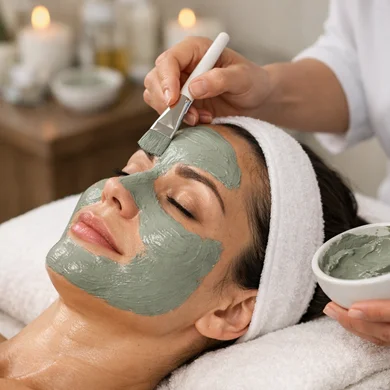
Clay facials control oil through mineral-rich ingredients like kaolin and bentonite that adsorb excess sebum, toxins, and impurities from pores. This reduces bacterial growth and inflammatory activity while improving pore appearance. Professional clay facials often include additional actives such as salicylic acid, zinc, and tea tree, along with barrier-restoring steps to prevent over-drying.
Best for: Surface shine, enlarged pores, mild acne, and T-zone congestion.
Herbal Facials
Herbal facials use plant-based ingredients to regulate sebum production while protecting the skin barrier and microbiome. Common botanicals include witch hazel for pore tightening, tea tree for antimicrobial effects, neem for anti-inflammatory benefits, green tea for sebum regulation, and aloe vera for soothing and hydration. These treatments offer gentle yet effective oil control.
Best for: Sensitive oily skin, combination skin, and those seeking gentle oil-regulating treatments.
Best Facials for Oily Skin: Comparison
| Factor | Deep Cleansing Facial | Clay Facial | Herbal Facial |
| Best For | Severe Congestion, blackheads, breakouts | Surface shine, enlarged pores, mild acne | Sensitive-oily skin, gentle regulation |
| Key Mechanics | Extraction + Purification | Adsorption + Mineral antimicrobial | Botanical sebum modulation |
| Intensity | High | Medium | Low-medium |
| Frequency | Every 3 – 4 weeks | Every 3 – 4 weeks | Every 4 weeks |
| Downtime | Mild redness 12-24 hours | Minimal | None |
| Chemical Actives | Yes (Salicylic acid, BHA) | Moderate (zinc, clay minerals) | No (plant-derived only) |
Tips for Oil Control
Skincare Routines
What you do between professional sessions has a significant impact on how well your oily skin responds to treatment. A consistent, correctly structured home routine extends your facial results and prevents the rapid sebum overproduction rebound that occurs with improper home care.
Morning routine for oily skin:
- Gentle sulfate-free foaming cleanser — removes overnight sebum without stripping pH balance
- Niacinamide serum — regulates sebaceous gland activity and strengthens the lipid barrier
- Lightweight oil-free moisturizer — prevents compensatory sebum overproduction from a dehydrated barrier
- Broad-spectrum SPF 30 or higher — non-negotiable daily protection
Evening routine for oily skin:
- Double cleanse — micellar water first to dissolve surface sebum, followed by a gentle foaming cleanser
- BHA toner (salicylic acid 0.5% to 2%) — maintains comedone-free follicles between professional sessions
- Lightweight hydrating serum — hyaluronic acid maintains skin hydration without occluding pores
- Oil-free moisturizer — seals hydration without contributing to follicular hyperkeratinization
Ingredients to avoid for oily skin — heavy mineral oils, petrolatum, coconut oil, and thick occlusive butters all contribute to comedone formation by blocking follicle openings and trapping sebum inside.
Skincare Routine After Facial for Oily Skin
After a professional facial, your skin becomes more receptive to products and more sensitive to harsh ingredients. Following a proper post-facial routine helps maintain results, control sebum production, and prevent breakouts.
First 24 Hours After Facial
- Avoid heavy makeup and pore-clogging products
- Skip exfoliants, retinoids, and strong acids
- Use a gentle cleanser only
- Apply a lightweight, oil-free moisturizer
- Use broad-spectrum SPF 30 or higher
Recommended Post-Facial Routine for Oily Skin
Morning Routine
- Gentle foaming cleanser
- Niacinamide serum for oil control
- Lightweight oil-free moisturizer
- Broad-spectrum sunscreen (SPF 30+)
Evening Routine
- Gentle cleanser or double cleanse
- Hydrating serum (hyaluronic acid or calming ingredients)
- Oil-free moisturizer
Avoid over-cleansing after a facial, as this can disrupt the lipid barrier and trigger compensatory sebum overproduction. Keeping the skin balanced helps extend facial results and maintain a clearer complexion.
How Often to Get a Facial for Oily Skin
Consistency is essential when managing oily skin. Because sebaceous glands continuously produce sebum, regular professional facials help prevent clogged pores and recurring breakouts.
Aligning treatments with the skin’s natural 28-day renewal cycle helps prevent comedone buildup, reduce inflammation, and maintain long-term oil control. Over time, consistent treatments can improve skin texture, reduce pore appearance, and balance sebum production more effectively.
Frequency
Consistency is the single most important factor in achieving lasting oil control from professional facial treatments. Oily skin benefits from more frequent professional sessions than any other skin type, because sebaceous glands are continuously producing sebum and follicular hyperkeratinization accumulates rapidly.
Recommended Facial Frequency:
| Skin Condition | Recommended Frequency |
| Oily skin with frequent breakouts | Every 3 – 4 weeks |
| Oily skin with mild congestion | Every 4 weeks |
| Oily skin maintenance | Every 4 – 6 weeks |
Aligning your facial schedule with the skin’s natural 28-day keratinocyte renewal cycle ensures comedones are cleared before they progress to inflammatory lesions, producing compounding improvement in oil control with each consecutive session.
Ingredients to Avoid for Oily Skin
Using the wrong products can undo the benefits of even the best facial.
Avoid:
- Heavy oils and butters
- Petrolatum-based products
- Thick occlusive creams
- Comedogenic ingredients
These clog pores and trap sebum, worsening breakouts and shine.
What Makes Professional Treatment More Effective
At-home care is important, but professional facials provide:
- Medical-grade formulations
- Advanced extraction techniques
- Controlled treatment environments
- Personalized skin analysis
What to Expect During a Facial for Oily Skin
Readers searching for their first professional facial want to know the step-by-step experience. A brief section covering:
- Consultation and skin analysis
- Cleansing and steam
- Extraction process (what it feels like, duration)
- Mask application
- Post-treatment care instructions
- Expected results timeline
Signs You Need a Professional Facial for Oily Skin
A short action listing clear indicators:
- Blackheads that return within days of at-home extraction
- Persistent shine within 1-2 hours of cleansing
- Breakouts concentrated along the jawline or T-zone
- Skincare products consistently “slide off” the face
- Visible pore enlargement over time
Lifestyle Factors That Affect Oily Skin
Professional treatments address oily skin externally, but several internal factors directly influence sebaceous gland activity:
- Diet — high-glycemic foods(white bread, sugary snacks, processed carbohydrates) spike insulin levels, which stimulate androgen production and increase sebum output. Clinical studies have demonstrated measurable.
- Hydration — chronic dehydration increases transepidermal water loss, triggering compensatory sebum overproduction. Adequate daily water intake supports lipid barrier function from within.
- Stress — cortisol directly stimulates sebaceous gland activity. Chronic stress produces a measurable increase in sebum output that no topical treatment can fully counteract.
- Sleep — disrupted sleep cycles elevate cortisol and inflammatory cytokine levels, compounding both oiliness and breakout frequency.
Conclusion
The right facial for oily skin doesn’t fight your skin — it works with it. A deep cleansing facial systematically clears comedones and purifies the follicular environment. A clay facial regulates sebum overproduction at the mineralogical level while suppressing Propionibacterium acnes activity. A herbal facial addresses oily skin holistically — using botanicals that modulate sebaceous gland activity, restore pH balance, and protect the skin microbiome without harsh chemicals.
Pair your professional treatment with a correctly structured home routine, commit to a consistent facial schedule every 3 to 4 weeks, and give your skin the time it needs to rebalance. That combination — professional treatment plus informed home care — is what produces the kind of lasting oil control that makes a genuine, visible difference to your complexion.
Ready to explore all your professional treatment options? Browse our complete skincare guides at Best Facial Treatment to find the right professional treatment for your skin today.
FAQs
Can oily skin also be dehydrated?
Yes. Oily skin can lack water while producing excess oil. Over-cleansing, harsh products, and skipping moisturizer weaken the lipid barrier, increasing transepidermal water loss and triggering more oil production.
What is the difference between oily skin and acne-prone skin?
Oily skin involves excess sebum and shine, while acne-prone skin includes clogged pores, inflammation, and bacterial activity. Oily skin may increase acne risk, but not all oily skin develops breakouts.
What is the best facial for oily skin?
Deep cleansing facials remove comedones, clay facials regulate sebum and tighten pores, and herbal facials provide gentle oil control. The best option depends on your skin concerns and sensitivity.
How often should I get a facial for oily skin?
Every 3–4 weeks for oily skin with breakouts, and every 4–6 weeks for maintenance. Regular sessions help control sebum and prevent congestion.
Can facials reduce oily skin permanently?
No. Sebum production is largely hormonal, but consistent facials reduce oil buildup, keep pores clear, and improve long-term oil control.
Is a clay facial good for oily skin?
Yes. Clay facials absorb excess sebum, reduce bacteria, and tighten pores without stripping the skin barrier.
Should oily skin be moisturized after a facial?
Yes. Skipping moisturizer can trigger more oil production. Use a lightweight, oil-free moisturizer to maintain balance.
What ingredients should I avoid with oily skin?
Avoid heavy mineral oils, petrolatum, coconut oil, and thick occlusive butters. Choose lightweight, non-comedogenic products instead.